Contamination control in accordance with EU GMP Annex 1
Discover how to achieve compliance with Annex 1 of the Good Manufacturing Practices (GMP) guidelines: quality risk management & Contamination Control Strategy (CCS).
EU GMP Annex 1 is evolving to keep pace with regulatory developments and technological advances. More comprehensive and better structured than the previous version, the revised Annex 1 extends its scope.
The objective of the Annex is to provide all manufacturers of sterile medicinal products and sterile active substances with recommendations to prevent microbial, particulate, endotoxin and pyrogen contamination. However, some of its principles may also apply to the manufacture of non-sterile products for which control of these contaminants is important.
We present here the key principles of the revised Annex, in particular the Contamination Control Strategy (CCS) and quality risk management. We then detail the main elements to be taken into consideration in order to achieve compliance with EU GMP Annex 1.
Why was a revision of EU GMP Annex 1 necessary?
A long-awaited revision of EU GMP Annex 1
EU GMP Annex 1 provides general recommendations applicable to all manufacturers of sterile medicinal products and sterile active substances established in the European Union or exporting their products to the EU.
Following an initial publication of the mandatory EU GMP in 1989, the text had been partially revised on three occasions: in 1996, 2003 and 2008. The text then remained unchanged since the last revision in 2008. In the intervening period, however, regulations and technologies evolved profoundly, to the point where the content of the Annex was no longer aligned with professional practices. As a result, it became essential to clarify and update certain points in order to better guide manufacturers.
A more comprehensive and better structured document
The new revision is more comprehensive than its predecessor. It spans 59 pages, compared to only 17 in the previous version. The document is also better structured, featuring a table of contents, a glossary and clearly defined sections. Existing sections have been expanded with additional clarifications, and new sections have been introduced to better frame manufacturers' practices.
Towards international standards?
The Annex recommendations apply not only to products manufactured in the EU but also to imports into the EU. Its scope therefore extends beyond the strictly European framework. Its development also reflects a commitment to international cooperation.
Indeed, the revision of the Annex was developed in collaboration with the WHO, the Pharmaceutical Inspection Convention and the Pharmaceutical Inspection Co-operation Scheme. For the EU, the objective is to remain aligned with the standards of these organisations and to work towards internationally accepted rules.
The key principles of the revised Annex
Quality risk management
The Annex sets out a general approach to preventing contamination risks in the finished product, using the principles of Quality Risk Management. These principles were already present in the previous version of the Annex, but the revision strengthens them.
In addition to the requirements of the pharmaceutical quality system set out in Chapter 1 of the EU GMP guidelines, quality risk management becomes a proactive tool and must be structured around the complete product lifecycle.
The new text imposes specific obligations to limit contamination risks:
- Strengthen the optimisation, qualification and validation of facilities, equipment and processesqualification et la validation
- Implement the means to identify, scientifically evaluate and control potential quality risks
- Use appropriate technologies to ensure the protection and control of products against the main external sources of contamination, such as personnel, materials and the environment
- Establish processes and an Environmental Monitoring System (EMS) designed and qualified by personnel with proven microbiological expertise système de surveillance environnementale (EMS)
The Contamination Control Strategy (CCS)
The concept of the Contamination Control Strategy is introduced in this new version of the Annex. A Contamination Control Strategy must be implemented at the manufacturing site to assess the effectiveness of the control and monitoring measures put in place to prevent contamination. The CCS therefore consists of a planned set of controls designed to ensure product performance and quality.
Manufacturers are now required to adopt monitoring systems and document their strategy. They must adopt scientifically sound and modern methods and are legally obliged to bring their practices up to standard. Compliance with sterility and other quality aspects applies throughout the entire production cycle, not only to the finished product. The manufacturer must take all necessary precautions to ensure the sterility of the products manufactured in their facilities.
Let us work together to find the right solutions for your environment, tailored to your contamination control strategy
The revision of EU GMP Annex 1 sets out in detail the points to be taken into account in your contamination control strategy. Drawing on our expertise in clean and sterile process engineering, our teams are able to help you meet the requirements of the text on the following points:
Premises and equipment
Our experts address this requirement with services for the study and qualification of your cleanrooms:l’étude et la qualification de vos salles propres
- Qualification of your AHUs (air handling units)
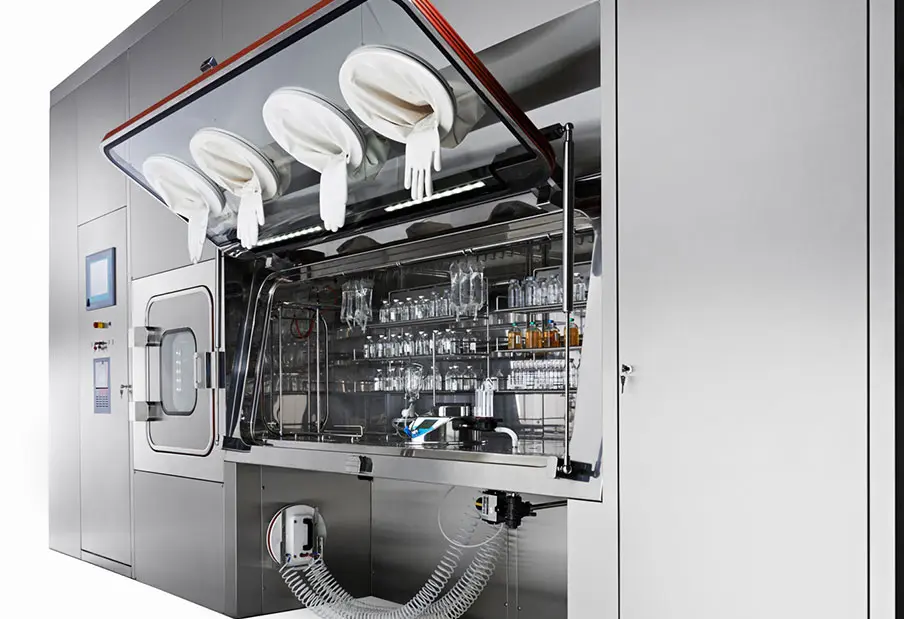
- Isolation/protection of sterile production with our RABS and isolator designs RABS et isolateurs
- Management of incoming and outgoing flows through intelligent airlockssas intelligents
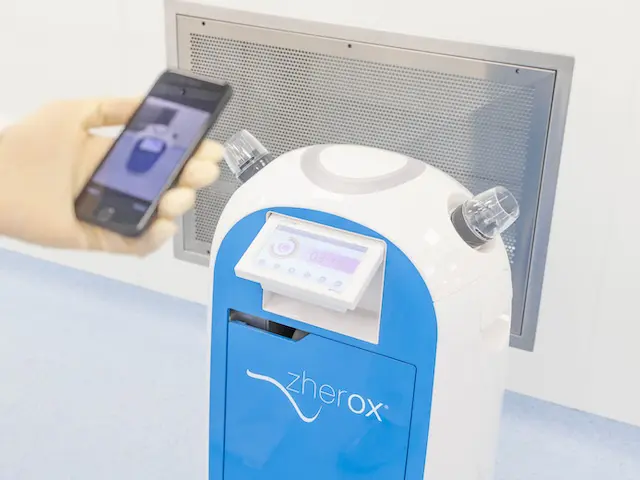
- Airborne Surface Disinfection (ASD)
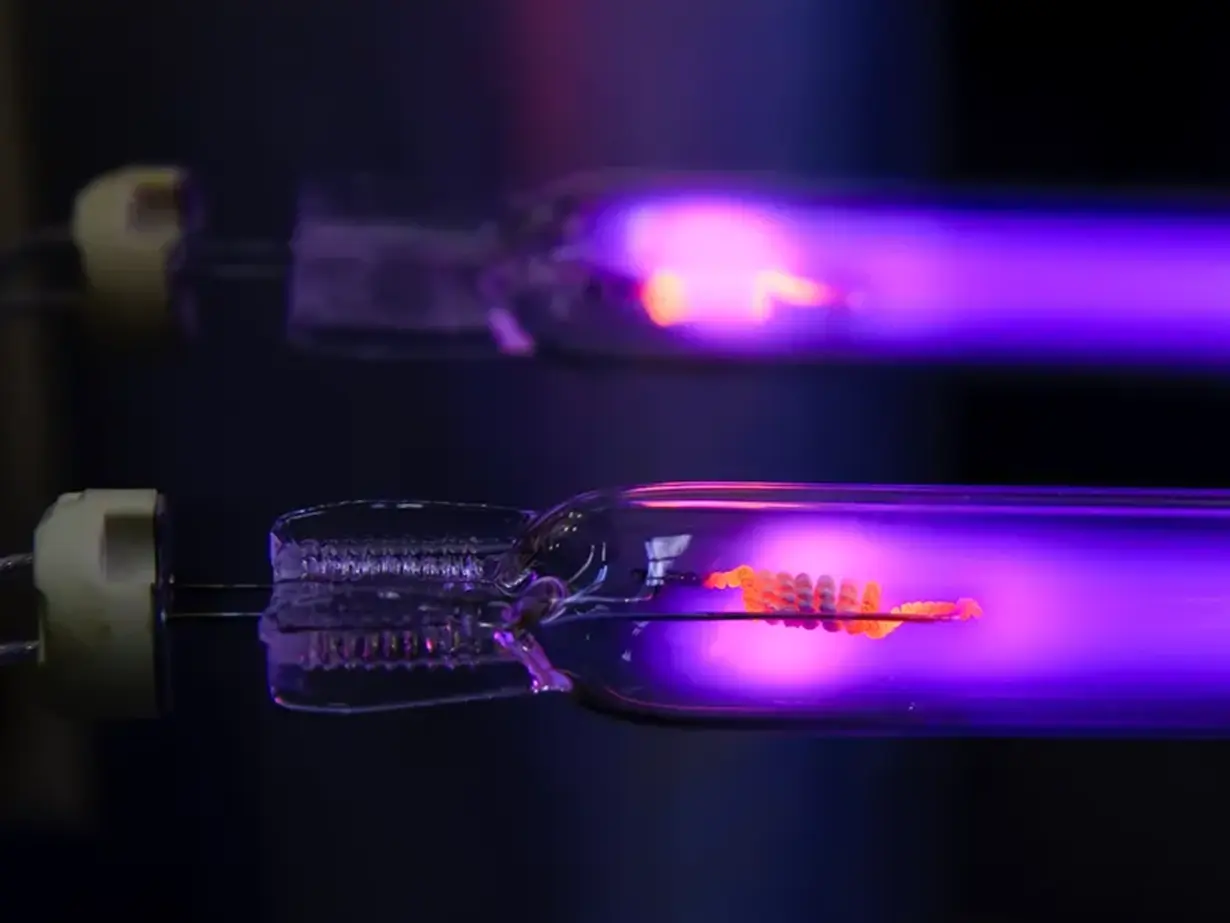
We also offer contamination control solutions for your premises using FAR-UVC technology, including decontamination airlocks for your personnel and materials, recessed spotlights for your ceilings, walls or aseptic filling processes.technologie FAR-UVCvotre personnel votre matérielvos plafonds, vos mursprocess de remplissage aseptique.
Personnel
For our gowning range, we offer innovative packaging and materials to enable contamination control before operators even enter your zones. We also provide specific training to qualify your personnel entering cleanrooms, ensuring that your staff adopt the correct behaviours and reflexes with regard to gowning.
Utilities
STERIGENE offers a comprehensive range of equipment for the production of pure fluids (PW, WFI, PS), as well as the associated storage and distribution systems, manufactured in compliance with pharmaceutical standards (Annex 1, ASME BPE, etc.).
Supplier approval
Our internal procedures and working methods are closely aligned with yours, to guarantee the level of excellence required by pharmaceutical standards:
- Robust quality framework
- QUALIOPI certification
- Change control management
- Optimised logistics platform
- Traceability of materials and finished products
- …
And we select our suppliers for their expertise and technical support throughout our partnerships.
Process risk management
By combining our equipment expertise with knowledge of your processes, our risk analyses will enable you to better understand and manage the risks associated with your processes.
Environmental Monitoring System (EMS)
The EMS must effectively monitor and minimise contamination using a risk-based approach, with justification of the adequacy of the programme. Particular importance must be given to trend analysis and continuous improvement. Given the continuous collection of large volumes of data, an EMS capable of providing information and early warnings is essential.
Through its partner Pharmagraph, STERIGENE and the SYNEXIN Group offer the enVigil solution :
- For cleanrooms and clean enclosures (isolators, RABS), expandable to laboratories, warehouses and cold rooms
- Real-time visualisation and alarms, long-term analysis for trend monitoring, diagnostics and continuous improvement
- Fully supports your compliance with Annex 1 and your Contamination Control Strategy
Sterilization process validation
Our performance qualification and cycle optimisation services will enable you to complete your validation files.
Preventive maintenance
The revised Annex requires that equipment, utilities and premises (both planned and unplanned maintenance) be maintained at a level that ensures no additional risk of contamination. To meet this requirement, STERIGENE supports you in the development and optimisation of your maintenance strategies: expertise, diagnostics, on-site audits, advisory services and tailored interventions.
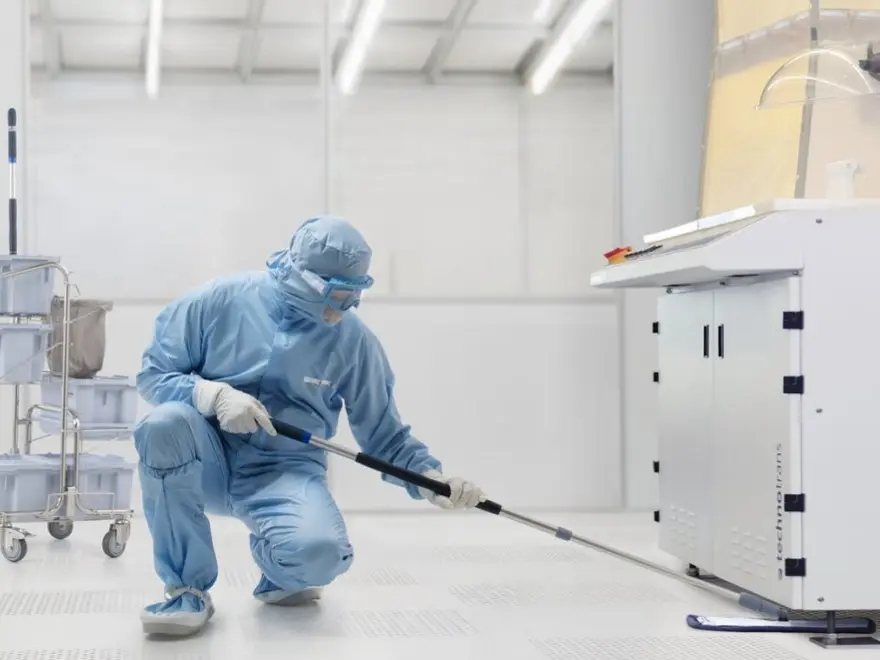
Cleaning and disinfection
We help you make the right product and protocol choices upstream to facilitate the validation of your bio-decontamination processes. Our teams support you in evaluating the various solutions and combining chemistry and microbiology to establish your decontamination processes. We offer a selection of products tailored to your specific needs:
- Detergents for cleaning
- Broad-spectrum disinfectants
- Sporicides
- Various formats: sprayers, canisters, aerosols, wipes
- Ready to use
- Sterile and non-sterile
We support you in implementing an Airborne Surface Disinfection (ASD) protocol through the purchase of equipment or the deployment of interventions at your premises.
Are you compliant with EU GMP Annex 1?
The revision of EU GMP Annex 1 requires the robust implementation of a Contamination Control Strategy.
To comply, you must reassess your practices and processes across the various points raised by the text.
- Do you manufacture products that are not intended to be sterile, but where the control and reduction of microbial, particulate and endotoxin/pyrogen contamination is considered important?
- Do you wish to understand the technical differences and characteristics of isolators and RABS?
- Do you feel that gowning is always a challenge, both in terms of space and procedures?
- Do your material flows cross your personnel flows too frequently?
- Do you need help testing the effectiveness of your AHUs?
- Do you need to carry out risk analyses of your processes or impact analyses to evaluate changes?
Did you answer YES to at least 3 of these questions?
We can help. Contact us to speak with one of our experts.
Our solutions for achieving compliance with EU GMP Annex 1