Visual inspection
Visual inspection (known in French as "mirage") refers to a visual inspection operation used to verify the absence of visible particles in the containers of pharmaceutical products.
The pharmaceutical industry is subject to very strict standards. The slightest manufacturing defect can pose risks to patients, potentially trigger a public health scandal with financial and reputational repercussions for the manufacturer, or at the very least halt or slow down production. This is why regulations set out rules and best practices for contamination control at the various stages of the production cycle.
Positioned towards the end of the production process, prior to final packaging, pharmaceutical visual inspection is an important quality control step for reducing the risk of particulate or cosmetic contamination, verifying container integrity and guaranteeing maximum patient safety.
What is visual inspection?
Definition of visual inspection
Visual inspection refers to an operation used to verify the absence of visible particles in the containers of pharmaceutical products. It aims to reduce the risk of particulate and cosmetic contamination and to ensure container integrity in order to guarantee improved patient safety. In practical terms, visual inspection must prevent the injection of a contaminated product into the human body. The operation therefore applies to all injectable medicines (parenterals). Indeed, the materials used for the packaging and administration of parenteral medicines are identified as a potential source of particulate contamination, whether from the glass or plastic used for containers, or from the rubber used for closures.
According to the European Pharmacopoeia, particulate contamination refers to the presence of extraneous, undissolved, mobile particles — other than gas bubbles — unintentionally present in solutions. The injection of a contaminated product exposes the patient to risks of: thrombosis, embolism, infarction, stroke, death, infection and inflammation.
Given these risks, the major international pharmacopoeias make visual inspection mandatory. They do, however, present certain differences. The European and British pharmacopoeias stipulate that injectable solutions, examined under appropriate conditions of visibility, must be "clear and practically free from particles". The United States Pharmacopeia stipulates that they must be "essentially free from visible particles" that can be observed during visual inspection.
In all cases, visual inspection is subject to a very high degree of variability, as it is a subjective control carried out by an operator.
How pharmaceutical visual inspection works
What can be inspected?
All parenteral products are subject to a visual inspection operation. Pharmaceutical visual inspection covers several types of containers:
- Ampoules
- Vials
- Micro-vials
- Cartridges
- Syringes
- Bottles
The product itself may be presented in the following forms:
- Liquid (translucent aqueous, viscous/oily, suspension)
- Solid (lyophilisate cake, powder)
The visual inspection operation enables the visual detection of defects:
- Particulate (inside the container)
- Cosmetic (outside the container)
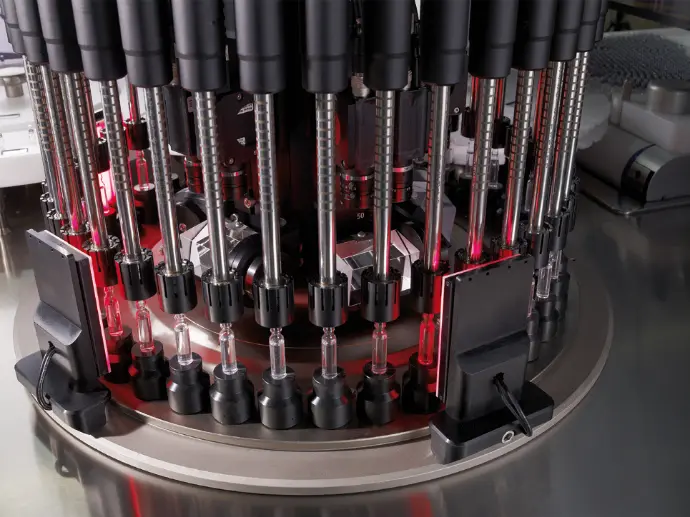
The response of contaminants to light
Pharmaceutical visual inspection aims to visually detect contaminants. To do so, visual inspection solutions subject the products being inspected to high light intensity.
Contaminants can respond differently to light — some absorb it while others reflect it.
The machine combines the advantages of different lighting techniques to detect the widest possible range of particles:
- Polarised light for fibres
- Light stripe projection: laser projection onto the object to scan the surface, enabling the shape of the particle to be reconstructed
- NIR/X-ray for bubbles
The background can also be varied depending on the type of particles to be detected. A black background facilitates the detection of reflective particles (by reducing light reflections on the glass). A white background, on the other hand, promotes the detection of other particles (by bringing more brightness to the product).
Cameras
Depending on the containers and product types for which potential contaminants are to be detected, different types of cameras are used.
A line-scan camera reconstructs an image line by line using a 1×n pixel sensor (a single line of pixels). It is suited to use cases involving opaque solutions or cosmetic defects.
For transparent liquids and particles, an area-scan camera is used. It captures a sequence of images. The pixels that make up its sensor form a matrix of size n×m (with n and m > 1).
Pharmaceutical visual inspection recipes
Here again, recipes vary according to the types of products to be inspected.
For suspensions or turbid products, the recipe is as follows:
- Homogenisation of the product
- High rotation speed to attach particles to the container walls
- Projection of lateral light to increase contrast
- Line-scan cameras for high precision
In the case of high-density suspensions, several stations may be set up to establish a correlation subsequently.
For highly viscous products (for example, hyaluronic acid), the following recipe is preferred:
- Trajectory analysis to determine apparent speed
- Reliable detection through prints and occlusions
- Robust determination of particle size and shape
Finally, methylene blue can be used to detect particles of up to 50–100 µm.
False positives and false negatives
Inspection may generate false negatives or false positives depending on various influencing factors:
- Glass surface quality
- Optical density of suspensions
- Air bubbles generated by operating conditions (conveying of units, temperature of solutions promoting degassing during inspection)
In the event of doubt, it is preferable to re-evaluate inspection performance.
Our pharmaceutical visual inspection solutions
At STERIGENE, we offer several pharmaceutical visual inspection solutions to meet your contamination detection needs, in line with your production throughput and budget:
- Tables de mirage CleanView®, développées et fabriquées en France par STERIGENE
- PWL semi-automatic inspection machines
- Easy or Plus automatic inspection machines
The ARGO, EASY, PLUS and PWL pharmaceutical inspection machines are developed by our partner OPTREL (STEVANATO Group).
Do you have contamination detection requirements?
Our teams support you in selecting a visual inspection solution aligned with your practices and budget. We offer both internally developed solutions and those provided by our partners.
Download our selection guide >
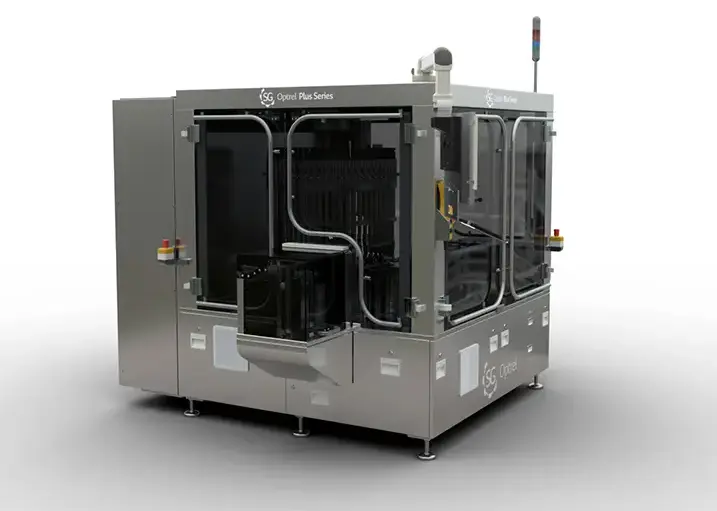
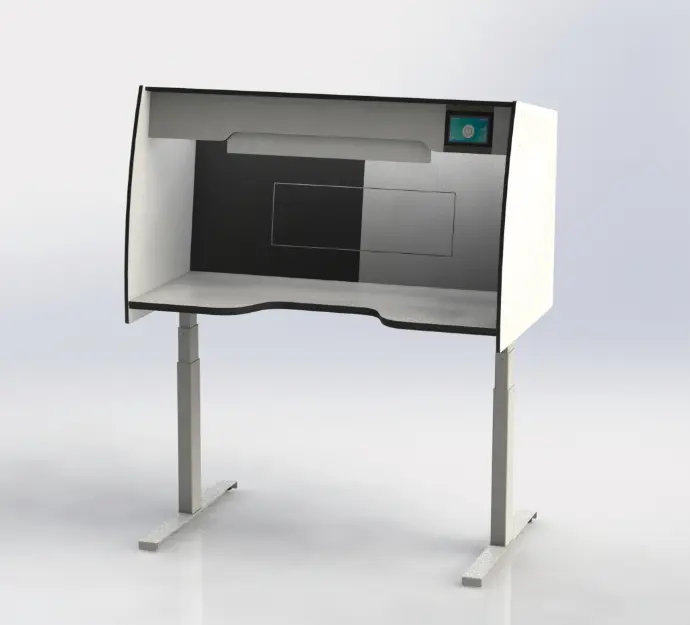
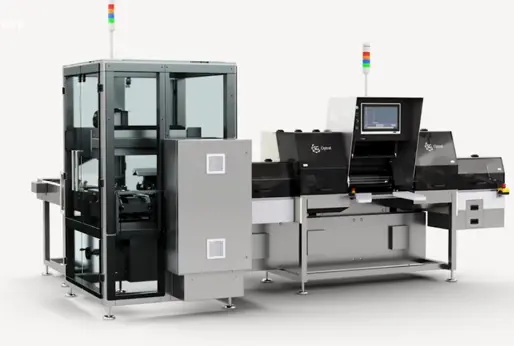
Our visual inspection equipment
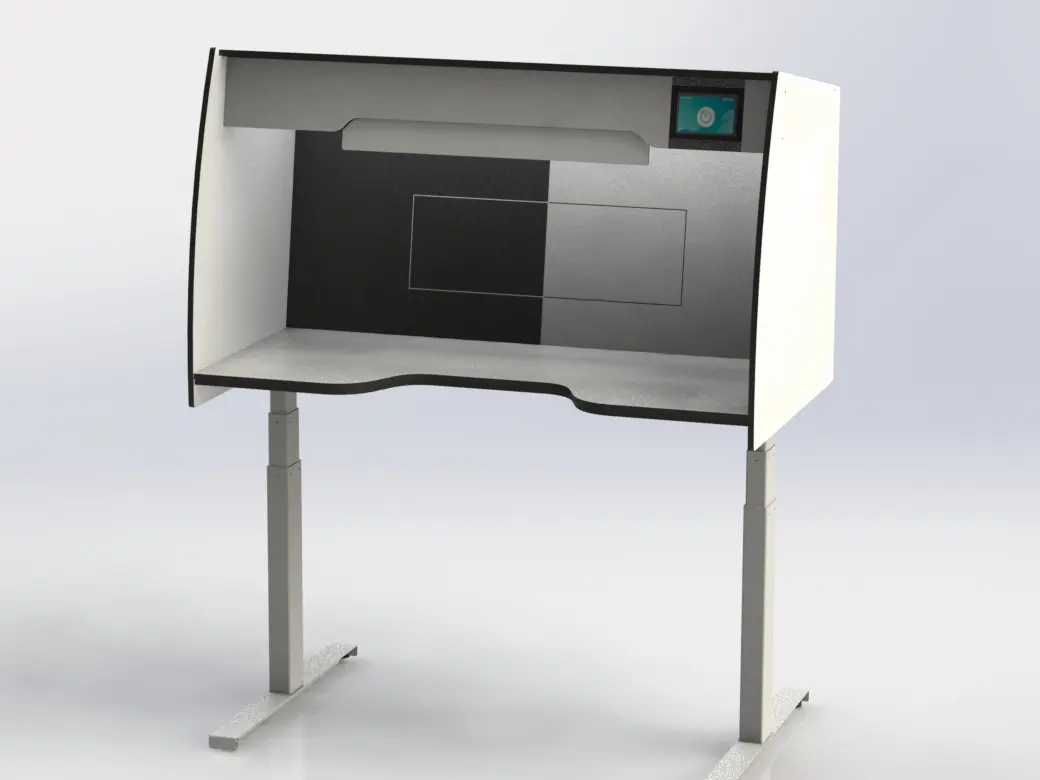
Manual visual inspection
Product feeding, handling and visual inspection are carried out by an operator.
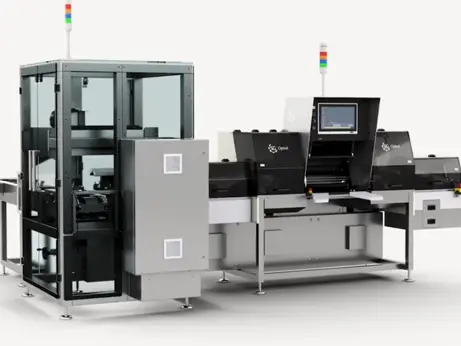
Semi-automatic visual inspection
Product feeding and handling are automated. Inspection is carried out by an operator.
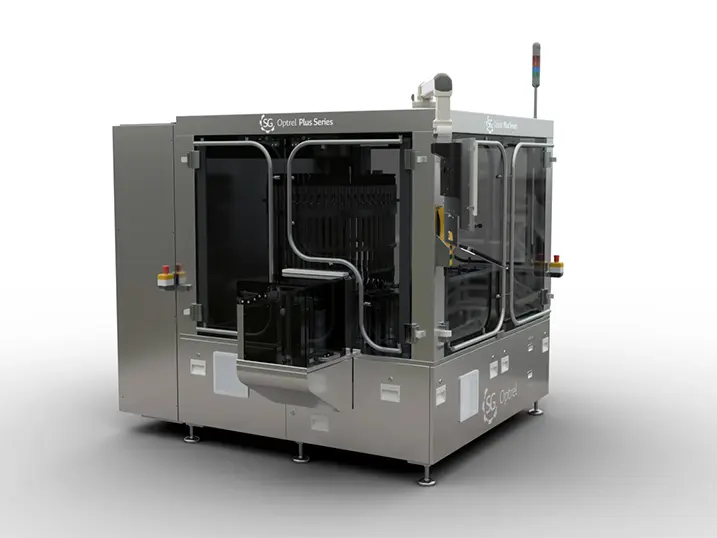
Automatic visual inspection
The entire operation is carried out in a fully automated manner.