Sterilization packaging — everything you need to know
How do you choose the right sterilization packaging to guarantee the safety and integrity of pharmaceutical products?
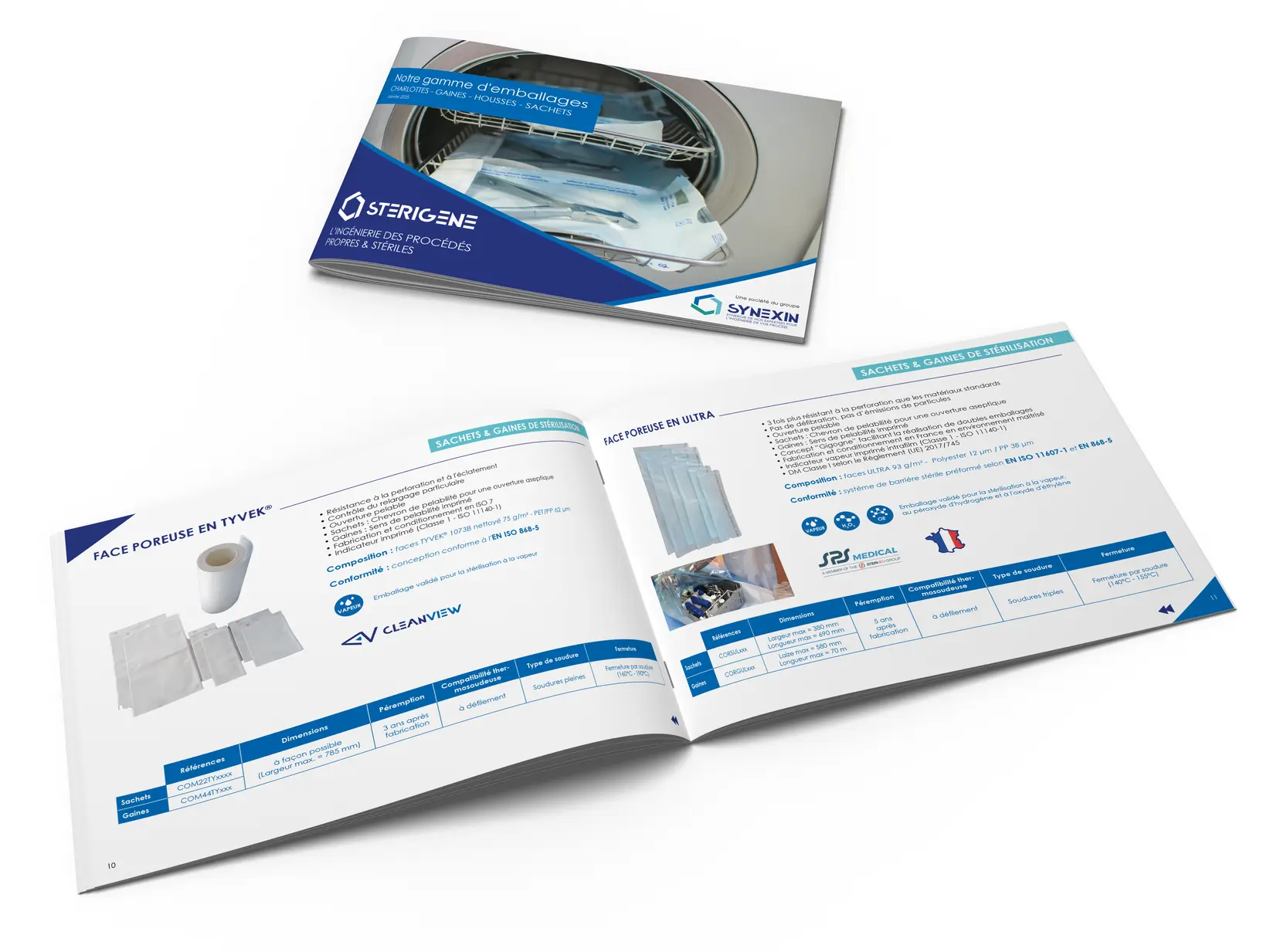
Different types of packaging can be used across numerous applications and in very different environments, from the most critical to the least critical:
- Transferring products from one zone to another
- Storing items and/or preserving a state of cleanliness
- Sterilizing by autoclave or irradiation
- Preserving/maintaining a state of sterility until use
Discover everything you need to know about sterilization packaging and how it fits into the contamination control strategy, addressing the cleanliness requirements of cleanrooms.
Standards & design
Regulatory references
The NF/EN 556 standard defines the concept of "sterility": an item or product is considered sterile when it is free from all micro-organisms, whether vegetative, spore-forming, pathogenic or non-pathogenic.
Preservation of the sterile state: According to ISO 11607, this preservation is achieved through control of the packaging process (sterile barrier system and protective packaging for transport and storage). Materials are packaged in packaging whose function is to maintain sterility. They are permeable to air and steam but impermeable to micro-organisms.
This packaging is subject to manufacturing, control and validation standards:
Focus on the EN 868 standard series, parts 2 to 10
These are known as "manufacturer" or "design" standards. Each type of packaging corresponds to one part of the EN 868 standards. They define the characteristics and performance of each type of material, for each type of packaging (e.g. pouches, sheets, containers). Every manufacturer must demonstrate compliance with one of the parts of the EN 868 standards in order to place their products on the market.
Part 1 was withdrawn in 2007
Part 2: sterilization wrap
Part 3: paper used in the manufacture of paper bags (specified in EN 868-4) and in the manufacture of pouches and reels (specified in EN 868-5)
Part 4: paper bags
Part 5: heat-sealable pouches and reels consisting of a porous material side and a plastic film side
Part 6: paper for low-temperature sterilization processes
Part 7: adhesive-coated paper for low-temperature sterilization processes
Part 8: reusable sterilization containers for steam sterilizers compliant with EN 285
Part 9: uncoated non-woven polyolefin-based materials
Part 10: adhesive-coated non-woven polyolefin-based materials
The design of sterilization packaging
They are designed with:
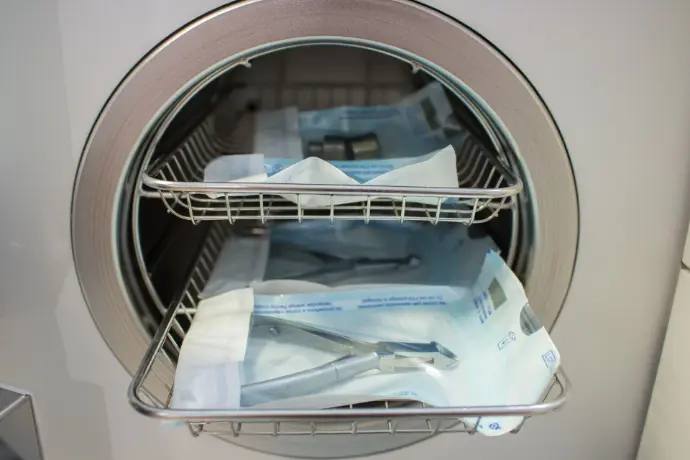
- A transparent side that allows the contents of the pouch to be seen and is completely airtight. It is made from several materials including polyester and polypropylene.
- A porous side that allows steam and air to pass through but prevents any micro-organisms from passing through, thanks to a filter with pores ≤ 0.22 µm. It may be made from cellulose, synthetic fibres such as polyolefin, or Tyvek.
Advantages & disadvantages
Sterilization packaging offers the following advantages:
- Heat sealing is straightforward
- Limits condensate formation upon contact with steam
- For packaging made from cellulose (porous side), it has a blotting paper effect: during condensate formation, the condensate is absorbed by the packaging, since cellulose is hydrophilic
Conversely, it has the following disadvantages:
- Fragile during transport
- Cannot contain heavy instruments
- Very sensitive to degradation caused by pressure variations and the number of steam and drying pulses
- Produces superheated steam at its surface in the event of dehydration (e.g. radiation from the jacket)
- Loss of integrity if unloaded wet (blotting paper effect for micro-organisms)
Different applications & their implementation
For what types of loads is it used?
Containers, Nalgene bottles, flasks, beakers…
Stainless steel equipment (stoppers, dip tubes, coils, pipe junctions, mixers, distribution nozzles, tools, spatulas, scissors, CLAMP fittings, valves, distribution pumps…)
Plastic, PTFE or silicone equipment (test tubes, seals, funnels, magnetic stirrer bars, distribution tubing, junctions and fittings…)
For what types of sterilization?
- Saturated steam (FOF)
- Air-steam (FOAF)
- ETO (Ethylene Oxide)
Care must then be taken to ensure proper compatibility between the packaging, the sterilization method and the load. Our experts are available to support you in implementing solutions tailored to your needs.
What are the good packaging practices?
The rules for composing a pouch load must be followed:
> Pouches must be arranged "plastic against plastic" and "paper against paper"
> Attention must be paid to the direction of condensate drainage: pouches should be positioned vertically wherever possible, and condensate must not flow towards the plastic side.
Heat seal validation must also be taken into account:
> The design of pouches must comply with the specifications of EN 868-5
> Heat sealing must be industrial (lateral seals) or carried out on the production site using a heat sealer compliant with EN 868-5D (test of 5 specimens before and after sterilization, carried out on 2 x 5 strips of 15 mm cut from 5 heat-sealed pouches)
> The minimum seal width must comply with EN 868-5C: the total width of the heat-sealed assembly must be greater than or equal to 6 mm
> The seal strength before and after sterilization must have an average sealing force greater than 1.5 N in accordance with EN 868-5D
> A visual test for sterilization resistance must be carried out to comply with EN 868-5C: none of the 5 reference pouches must burst during the sterilization cycle
Sterilization cycles
Rate of pressure increase:
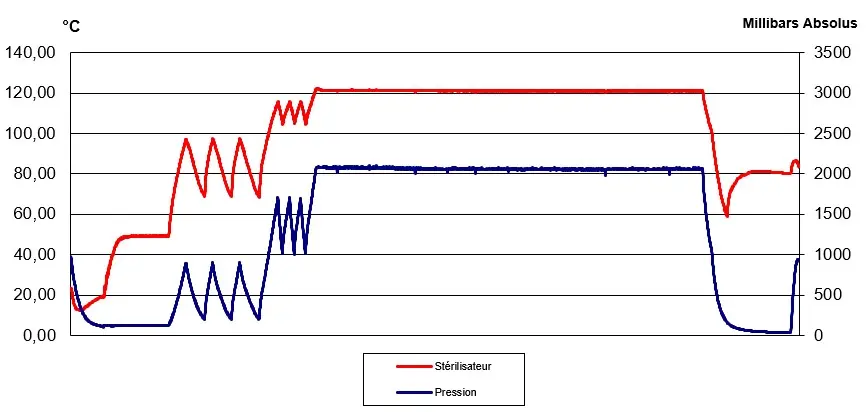
According to NF/EN 285, the rate of pressure increase must not exceed 10 bar per minute, i.e. 170 mb/sec. Standard values are typically around 10 to 20 mb/sec during the heating phase. Too rapid an increase in pressure (steam inlet speed) promotes the stabilisation of air bubbles trapped in wrapped porous loads. The rate of pressure increase can be managed by the control system through gradient programming (number of mb per second) or through stages (timed steam inlet), or adjusted manually using a needle valve. The sizing of the hydraulic circuits can also play this role, but in this case no adjustment is possible. Sometimes it is simply the steam generation capacity of the steam generator that limits the rate of pressure increase.
Rate of pressure decrease:
A rapid decrease in pressure creates considerable forces on products and packaging, promoting the release of air molecules trapped during the pre-treatment phase and the vaporisation of condensate during drying. According to NF/EN 285, the rate of pressure decrease is limited to 10 bar per minute, i.e. 170 mb/sec. If the pressure exhaust rate after the plateau is too high, there is a risk of the pouches bursting. Typical values are more commonly around 20 mb/sec.
Drying efficiency for pouched equipment:
During sterilization, steam must condense on the products in order to transfer its heat to them. The amount of condensate generated to achieve a temperature rise depends on the material. The transfer of heat energy is theoretically reversible, meaning that the amount of heat accumulated by the products during sterilization should be sufficient for drying if it is returned to the condensate. Drying is achieved through the principle of water vaporisation as a function of temperature and pressure reduction. The rate at which vacuum is achieved and the vacuum power are therefore critical factors. Condensate remains predominantly attached to the products from which it absorbed its heat energy.
This is unquestionable for textiles, for which a vacuum of around ten minutes is sufficient to achieve drying that meets the dryness standards (max. +1% weight gain).
For equipment, controlling the drying process is more complex (max. +0.2% weight gain). Approximately 30% of the condensate detaches from the products to which it has transferred its heat. If, by gravity, this condensate flows to the bottom of the sterilizer vessel, it will be vaporised upon contact with the jacket or extracted by the vacuum pump if the vacuum port is located in the lower part of the sterilization chamber. However, if it becomes trapped in an area lacking an immediate heat source, its excessively low temperature compromises vaporisation. Heat must then be brought to these areas to allow the condensate to warm up and potentially vaporise — this is known as fractional drying, applicable only to equipment loads.
When vacuum drying alone is insufficient, fractional vacuum cycles using carefully calibrated sterile air inlets can assist with drying by promoting heat radiation from the jacket towards the load. These fractions can also be introduced using steam or an alternation of steam and air. The mechanical effect of these variations on the load can also displace some condensate towards areas that may be more favourable for receiving heat. The flow of dry air from the ventilation cycles may be able to absorb suspended moisture if carried out below atmospheric pressure. It should be noted, however, that these complex systems only refine the drying process (influencing it by approximately 10 to 15%). It is the first drying vacuum after pressure exhaust that plays a fundamental role in the final drying result.
However, if the material is too cold before the sterilization plateau (poor pre-treatment), if the vacuum system is unable to reach the required level, or if the condensate has moved away from a heat source and the heat cannot reach it, then unwanted residual moisture must be expected.
In a properly functioning unit, controlling the drying process is only conceivable with perfectly homogeneous and reproducible loads. The specific constraints of the pharmaceutical or laboratory environment mean that we are obliged to manage deviations and accept them. Nothing can prevent one or more items from occasionally being wet. Of course, basic load plan composition rules apply, but these rules are often site-specific and cannot be transposed from one site to another. It is equally important to choose the packaging carefully based on the composition of the products to be sterilized and the capabilities of the sterilizer, as well as your own expectations.
Our sterilization packaging solutions
Find out more

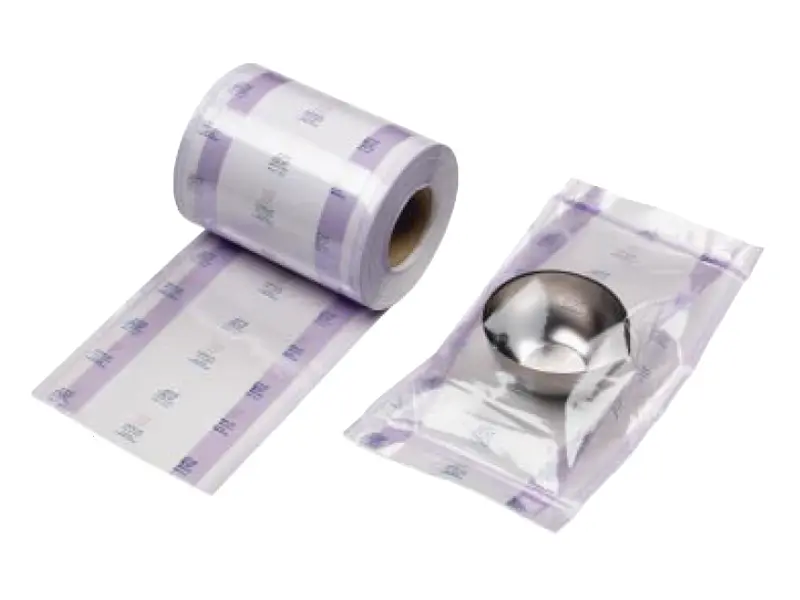
Drawing on its expertise in contamination control, STERIGENE has carefully selected manufacturing partners qualified for their sector expertise, and has developed its own brand: CLEANVIEW, specialising in cleanroom and laboratory consumables.