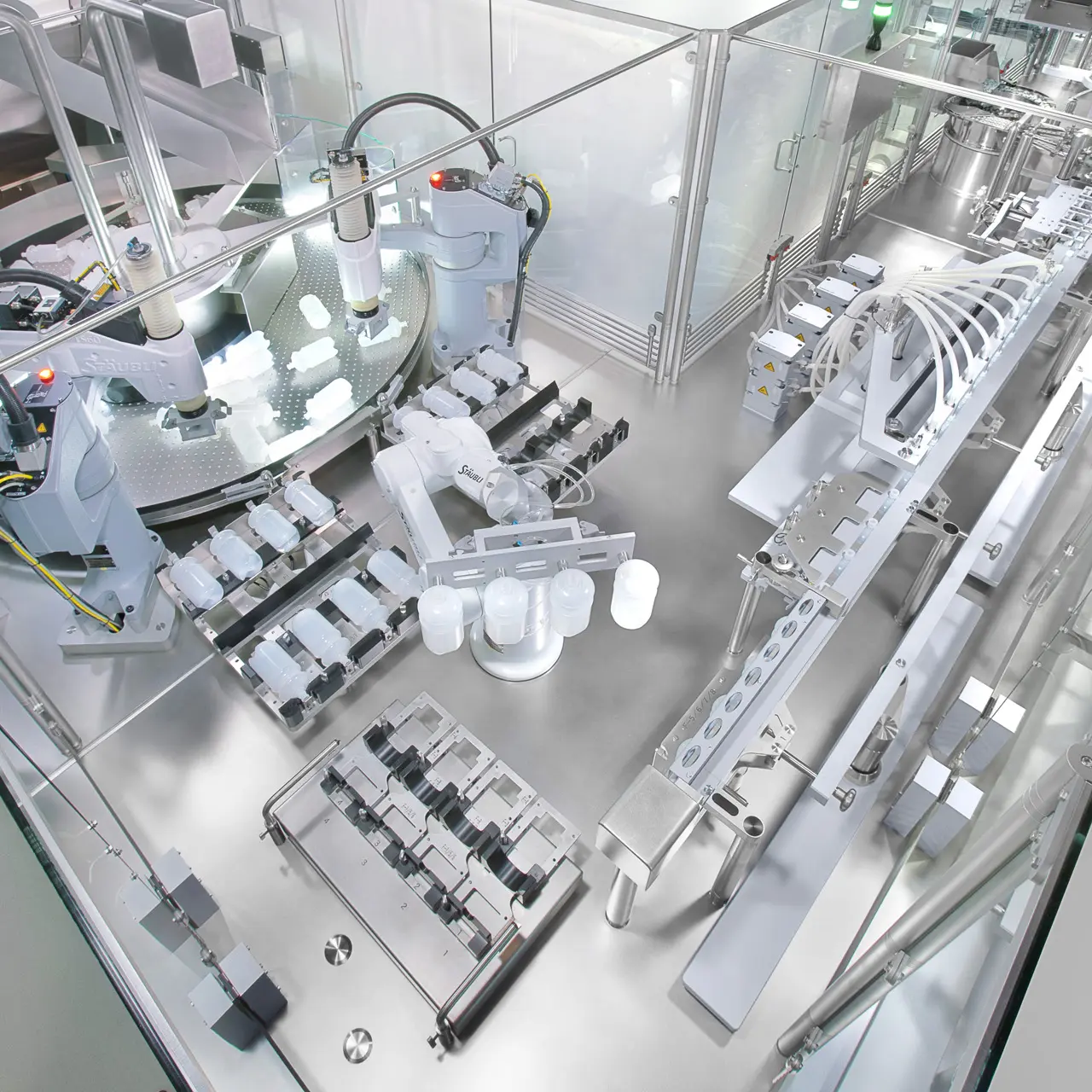
Aseptic filling
Pharmaceutical aseptic filling is a critical process used for the packaging of sterile products that cannot undergo terminal sterilization. It is at the heart of the manufacture of injectable medicines, vaccines, biological products and certain sensitive cosmetic formulations.
STERIGENE supports manufacturers in the design, qualification and validation of aseptic filling lines, ensuring compliance with Good Manufacturing Practices (GMP) and international requirements.
What is aseptic filling?
The aseptic filling process consists of:
- Maintaining the sterility of the product (achieved by filtration or an appropriate thermal process)
- Ensuring the sterility of containers (vials, syringes, bags)
- Carrying out filling in a controlled environment (ISO 5 cleanrooms / Grade A)
- Guaranteeing immediate hermetic closure
The slightest failure can directly impact the microbiological quality of the product, making a rigorous, risk-based approach essential.
This process is critical for sterile injectable products, particularly in the pharmaceutical, biotechnology (biotech), sterile cosmetics and sensitive food sectors.
The key stages of the aseptic filling process
1. Product sterilization
The product is generally sterilized upstream via 0.22 µm sterilizing filtration or appropriate thermal processes.
2. Sterilization of containers and closures
Mastering this step is essential to guarantee the absence of initial contamination. Depending on the format (vials, syringes, bags, pots), different technologies are used:
- Thermal depyrogenation (high-temperature tunnels) for vials
- Steam sterilization (SIP)
- H₂O₂ decontamination
- BFS (Blow-Fill-Seal) technologies in a closed environment
3. Aseptic environment (cleanrooms)
Filling is carried out in classified environments: Grade A zone (ISO 5) at the filling point, or Grade B, C or D environment depending on the architecture.
Technologies used include unidirectional laminar airflow, isolators (hermetic physical barrier) or RABS (Restricted Access Barrier Systems). Critical parameters include viable and non-viable particles, differential pressures, temperature and humidity, and airflow velocity and uniformity.
4. Aseptic filling line
Automated operations include:
- Aseptic product transfer
- Precision volumetric or gravimetric dosing
- Aseptic closure (stoppering, capping, sealing)
Human interventions are strictly limited and controlled.
5. In-process controls
- Environmental monitoring (EM)
- Control of Critical Process Parameters (CPP)
- Filter integrity testing (before/after)
- Fill volume control
6. Aseptic process validation
The process is validated through aseptic filling simulations (Media Fill):
- Use of culture media
- Simulation of normal and worst-case conditions
- Analysis of any contamination events
These tests demonstrate the robustness of the process.
Risk management: a structured approach
Aseptic filling is part of an overall risk management strategy and is strictly governed by international reference frameworks:
Good Manufacturing Practices (GMP)
- Comprehensive document management
- Operational traceability
- Equipment qualification (IQ, OQ, PQ)
- Process validation
Annex 1 of the GMP guidelines — Sterile products
- Implementation of a formalised Contamination Control Strategy (CCS)
- Strengthened requirements on human interventions
- Widespread adoption of barrier technologies (isolators preferred)
- Enhanced environmental monitoring
- Increased requirements for aseptic simulations
International recommendations
- FDA — Guidance for Sterile Drug Products Produced by Aseptic Processing
- ICH (Q8, Q9, Q10): quality, risk management, pharmaceutical quality system
- ISO standards (cleanroom classification)
Our solutions for aseptic filling
Commitment: safety, compliance and performance
Are you looking for an expert in pharmaceutical aseptic filling or GMP sterile processes?
In an environment where regulatory requirements and product criticality are at their highest, we provide you with solutions to:
- Secure the sterility of injectable medicines
- Reduce the risk of microbiological contamination
- Meet the requirements of regulatory authorities (EMA, FDA)
- Improve industrial performance and reproducibility
A comprehensive approach to the aseptic process
Our approach is based on complete mastery of the aseptic chain:
- Definition of User Requirements Specifications (URS)
- Facility design (cleanrooms, flows, isolators, RABS)
- Selection and integration of filling equipment
- Management of critical utilities (sterile air, steam, gases)
- Facility qualification (IQ/OQ/PQ)
- Validation of aseptic processes (media fill)
Each project is carried out with a systemic vision to secure the overall performance of the process.